


Mujeeb Qazi
(President of North Texas Muslim Organizations,
co-chair of the ISNA
convention in Texas 2024)

Mujeeb Kazi, President of North Texas Muslim Organizations, co-chair of the ISNA convention in Texas 2024, and one of the leaders of the Muslim community in Texas, shares with Context Corner his journey in activism In America and the story behind the ISNA convention’s extraordinary Succes in Texas this year.
Context Corner: Mr Mujeeb Kazi, you have been an active leader of the Muslim community. Tell us about your journey in America. When did it start, and what were the significant steps?
Mujeeb Kazi: My story started in 1996 when I came to the United States to study. Like everyone else, I had to go through initial hardships, working demanding jobs, but at the same time, I never gave up on learning. But I always had the ambition to have my own business. I had my bachelor’s degree back home, but when I came to the United States, they did not recognize my degree, so I had to do it again as a freshman in New York. I studied there for a couple of years and then moved to Dallas. When I went to UTA, they did not recognize the education I had studied in New York, so I had to start over as a freshman again.
I had to complete my two bachelor’s degrees before I was admitted to the master’s program. So, I have one bachelor’s degree from back home, one from New York, and one from here in Dallas, Texas. And then, I did my MBA. But along with that, I dreamed of pursuing my own business. So, I went into different companies, where I started as a minority shareholder. I went from being a minority shareholder to a successful businessman for seven to eight years; I established my own business in several locations. But then, all of a sudden, 9 -11 happened, and then my identity was in crisis. So, I wanted to ensure that my religion is represented by me versus somebody else.
I started engaging with the interfaith fraternity here in North Texas. I started visiting scholars, pastors, churches, and different religious organizations and started building relationships. That set the stage for me to get into civic engagement, so I was able to run for the city council here in North Texas.
I also ran for election and have been involved in civic engagement and the social sector. Primarily, my focus has been building bridges across the community for the common good between religious communities. Based on that, the North Texas Islamic Council is an umbrella organization that elected me to serve as president here in Texas. This is my second term serving as president of the organization.
Context Corner : Can you tell us about the North Texas Islamic Council and this organization’s goals?
Mujeeb Kazi: North Texas Islamic Council is an umbrella organization representing a little over 110 organizations in North Texas. We have nearly 80 to 90 mosques, Islamic schools, service organizations, and humanitarian organizations in North Texas. So, we needed one unified umbrella organization to set the narrative for the Muslim Ummah living in North Texas. If you are familiar with the state of Texas, North Texas is becoming a hub of Muslim activities. have top-notch scholars, world-renowned scholars, the best schools, and Islamic schools, and many people are moving in.
We wanted one unified platform for all the masjids to be represented. But we have a system that does not interfere in any of the organization’s personal affairs. When it comes down to the collective decision and collective narrative, that’s where the intake comes into play.
Context Corner : North Texas Islamic Council cooperated with ESNA to organize the convention in Dallas. If you tell us about this cooperation?
Mujeeb Kazi: Mujeeb Kazi: ISNA is a national organization that has been around for over 61 years. One of its flagship events is the convention. The convention has many programs that run for four days and cater to every single segment of Muslim society.
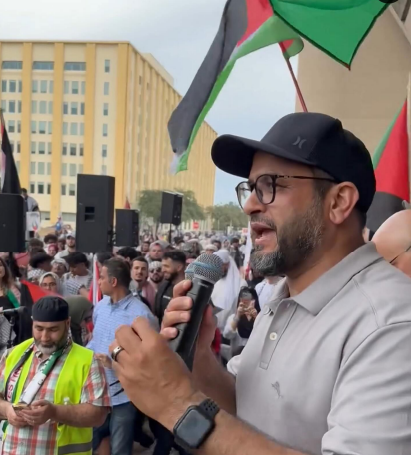
So, ISNA offers something for every one of us. So, ISNA coming to Dallas for the first time in the history of 61 years was a huge thing for the Texan Muslim community. So, first of all, all the credit and kudos to the organizers and the convention’s chairman, Brother Azar Aziz, for making the effort to bring the ISNA Convention to Dallas. Islamic Council being the largest organization, they partnered with us. So, we worked together to organize the convention. And the effort started about six months ago. It was advertised. Fortunately, as far as I know, ISNA has broken all its previous records regarding the number of attendees.
On the convention’s third day, 21,000 plus people showed up under one roof. over 150 top-notch Islamic scholars of, you know, not just Islamic scholars, experts, came from all across the United States and from other parts of the world that they came. there were inspiring sessions catering to every single segment of our community.
There were booths representing different business organizations under one roof. Speakers like Dr. Yasir Qadhi and Mehdi Hassan attended the event, and a presidential candidate, Cornell West, also attended.
So, ISNA offers something for every one of us. So, ISNA coming to Dallas for the first time in the history of 61 years was a huge thing for the Texan Muslim community. So, first of all, all the credit and kudos to the organizers and the convention’s chairman, Brother Azar Aziz, for making the effort to bring the ISNA Convention to Dallas. Islamic Council being the largest organization, they partnered with us. So, we worked together to organize the convention. And the effort started about six months ago. It was advertised. Fortunately, as far as I know, ISNA has broken all its previous records regarding the number of attendees.
On the convention’s third day, 21,000 plus people showed up under one roof. over 150 top-notch Islamic scholars of, you know, not just Islamic scholars, experts, came from all across the United States and from other parts of the world that they came. there were inspiring sessions catering to every single segment of our community.
There were booths representing different business organizations under one roof. Speakers like Dr. Yasir Qadhi and Mehdi Hassan attended the event, and a presidential candidate, Cornell West, also attended.
Context Corner : Why did Texas break the records? Since you say, it was the first convention in Texas by ISNA in the last 61 years?
Mujeeb Kazi: We have a large number of Muslim communities residing in North Texas. Most people travel yearly to the convention in other parts of the country. But Dallas, number one, was the first time. And number two, people found it to be in their backyard, and we have a large number of Muslims living in the area. It was convenient. People can go in the morning, attend as many sessions as possible, and then return home in the evening. It was convenient. Number three, it catered to our society’s more significant segment. Plus, the organization was amazing.
One of the biggest challenges for the North Texan or not the North Texan North American Community Muslim communities is how to provide them a platform for their youth. So you can call they have a segment called Minaf, which is just for the Muslim youth. It is run, managed, organized, and orchestrated by the youth, and it is more like a parallel convention running side by side with the ISNA convention. So that was very encouraging, and the parents and the community that was thirsty for a platform to be in their backyard were conveniently located and inexpensive as well. That was, and on top of that, the number of speakers that they introduced to the convention.
People from the administrations, politicians, law enforcement agencies, political representatives, Muslim representatives, congressmen, representatives, state representatives, mayors, city councils, all these people were there. So, they were there because America has unique offerings.
They are liked, loved, and inspired by the youth. They listen to them, for the most part, on TV, YouTube, and podcasts. But this was the live chance for them to come and see them, listen to them, learn from them, greet them, meet them, and take advantage of the convention. And they overwhelmingly did it.
Context Corner: What made the topics attractive, and how relevant were they to current affairs and the concerns of the Muslim communities?
They are liked, loved, and inspired by the youth. They listen to them, for the most part, on TV, YouTube, and podcasts. But this was the live chance for them to come and see them, listen to them, learn from them, greet them, meet them, and take advantage of the convention. And they overwhelmingly did it.
Mujeeb Kazi: So, the theme of the convention was forging faith into action. So, how can our faith be forged into an action? One of the hallmarks was educating people about the conflict that is going on in the Middle East and other conflicts that are impacting Muslim communities here locally. So, people have a strong opinion about interfaith activities and our civic engagement activities. So, we needed to educate our communities through our scholarship not only to assimilate but also, while maintaining and keeping our own identity as Muslims, on how to work with other citizens across the communities and different religions. We had our; we have our interfaith banquet, where we had a little over 400 representations from different interfaith fraternities. And then we had our government officials that we have developed a relationship for 61 years. People from the administrations, politicians, law enforcement agencies, political representatives, Muslim representatives, congressmen, representatives, state representatives, mayors, city councils, all these people were there. So, they were there because America has unique offerings. We have freedom of religion. We have a freedom of practice. We have a freedom of voice. We have a freedom of choice. We have a freedom of expressing our views. So how can we, you know, value those ideas and work towards them? we wanted to display our Muslim community how contributing, vibrant, and productive the Muslim community is, and We have shown the number we have demonstrated intellect. We have shown our progress and that our community is ready to give back. For example, ISNA is the only organization that certifies chaplaincy for all three services. They were there who represented. you know, as a citizen of the US, as a contributing community, as a vibrant community, as a giving community, there were humanitarian organizations that were represented in the convention that give back to the community in times of crisis, in times of need.
We have communities that offer hospitals, schools, education, and free services. All of this is on display. So, number one, we wanted to display our unity. Number two, we wanted to display our sense of giving back to the community. Number three, we want to display our social, civic, and multi-religious work to our fellow citizens.
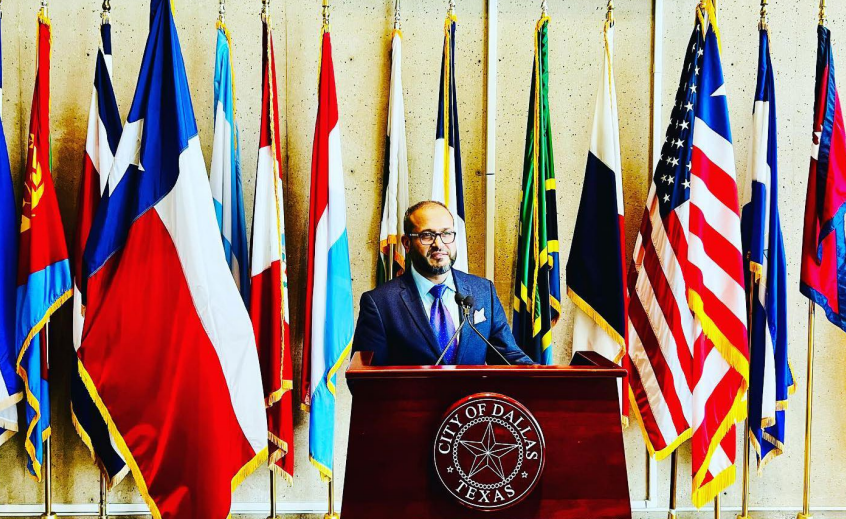
Context Corner : The Muslim community, as much as the other Americans, are heading to the election. To what extentthis area as a political side of being a citizen was highlighted in the convention?
Mujeeb Kazi: Things are polarized and the Muslim community has a very strong opinion about the election, about the candidates. So, there was a discussion about civic engagement and we wanted our people to make sure that they go out and vote, make sure their voices are heard, make sure that they don’t sit back, relax and not to have their vote counted for because it is very important for every one of us in the US making sure that our vote, our voices are counted for, are heard for. So obviously it’s a people’s choice how they want to choose which party, which candidate they want to go and choose, but the important importance was emphasized that every Muslim must go out and vote and those who have not registered themselves.
Generally, the tendency is that if the things are going fine, people tend not to do anything when it comes down to election, not to participate. But they were educated, they were emphasized that they must go out and vote. Whatever candidate that they choose, whatever party that they choose, they need to go out and vote. It must take place. unless you want to be part of the platter you would always be on the menu. So, we don’t want to be part of the menu. We want to make sure we are on the platter and we are on the table. So that was heavily emphasized and discussed.
Context Corner : More participation is very critical, but this year, due to what happened in Gaza and what happened in the last few years, also in other Muslim areas, we have seen a tendency to change, in a recent survey, a tendency to vote for the third party, the Green Party or other parties. Even though the previous survey did not give a lot of trust in Biden, after Kamala Harris joined the race, things changed to some extent. How do you see these developments?
Context Corner : More participation is very critical, but this year, due to what happened in Gaza and what happened in the last few years, also in other Muslim areas, we have seen a tendency to change, in a recent survey, a tendency to vote for the third party, the Green Party or other parties. Even though the previous survey did not give a lot of trust in Biden, after Kamala Harris joined the race, things changed to some extent. How do you see these developments?
Mujeeb Kazi: People in the Muslim community have a very strong reservation and opinion about what happened. You know, this community has been in line with certain parties in the past. And then they have their voices, basically saying that they were betrayed. They feel betrayed. And this year, people have a strong opinion and are polarized. they are very strong about making their opinion heard. Still, the most important part was that they must go out and vote, now being part of the civic engagement and civil society, going out, participating in voting. That was the most important thing that we tried to
educate our congregants.
Context Corner : The Muslim community showed that they prefer to be employees and value the safety of the job. Is this changing, and how do such conventions try to help spread the culture of entrepreneurship?
Mujeeb Kazi: The message to the youth and the community is that if you want to succeed, whether it’s a job, a business, entrepreneurship, technology, medicine, engineering, or whatever field, try your best. Make sure you are on the top. Accel it. That’s number one. Number two, I would encourage all of them to strive to become an employer rather than becoming an employee. Go for business. Opportunities are enormous. For anyone who wants to excel, the US is the place where the platform is wide open, and there is no red tape. There is plenty of opportunity for you to excel. The only person who does not
excel is the one who doesn’t want to excel, who doesn’t want to get out of their comfort zone, who doesn’t want to be at a place where they feel like they’re challenged. So, accept the challenge, take it open-heartedly, excel in it, and try to become an employer versus an employee. And that’s what my goal was. And I have seen no hindrance towards that journey. As I said, I initially worked through my odd jobs, saved some money, became a minority shareholder, and worked very hard 16 hours. I used to work 16 hours a day, then four hours in the evening, I would go to university, and then four or five hours of sleep. I remember there was one year and six months that I didn’t take a single day off from work or school. For sixteen months, I went non-stop.
I encourage other people to do Business; this is the way to go, and plenty of opportunities exist. You can start your business as low as a minimal start online.
Context Corner : A lot of people might consider this oldgeneration speech. This used to work for you, but the new generation, the majority of the second generation, if we say in America, the Muslim community, is the second generation will not prefer to work for 16 hours, so they choose the safe job, nine to five, then enjoy with their friends, how this culture can change in the second generation?
Mujeeb Kazi: would not blame the second generation. I would blame the first generation because sometimes people come from humble backgrounds, working very hard and trying to make a living. And then they think they’re giving your children a golden spoon, which will help them offset what they have gone through. I don’t believe that is the right approach. So, the right approach should be adopted in American society. I remember that back in 1996, when President Clinton became president, he had only one daughter. And when she got her first

job at the clothing store, it became national news. Our daughter of a president is working as a cashier in a clothing store. So that is something that America offers. No job is a lousy job. Every job has its value. Our first generation needs to make sure that their children are trained to be self-reliant and self-dependent rather than dependent on their parents.
Context Corner : A lot of organizations in the Muslim community still give significant roles to old leaders, and the youth aren’t represented. How can we change this mentality?
Mujeeb Kazi: I have been a very open proponent of this. I want our youth to take the lead practically. So, uncles need to trust their youth. Number one, education is more important. Education of who? Education is not the education of youth, the
education of our uncles. Uncles must hand the baton to our youth to lead the masjid. A masjid, I’m just giving a masjid with an imam who was born and raised and educated in America, is becoming a more iconic mosque, a more progressive mosque, a more welcoming mosque versus a mosque that uncle, a mindset or baggage that it has carried from back home for very tiny things. Uncles have this habit of coming from home, yelling and screaming at their youth. Youth from our current generation only know one language: the language of love, the language of respect, the language of trust, and the language of
giving them responsibility, and they will uphold it.
Context Corner : To what extent do you think this genocide in Gaza this year motivated people to be more active in the public square?
Mujeeb Kazi: I would say there’s a massive shift; there are several surveys that are out there that represent the emotions of the people, especially the Muslim community. A lot of people, I mean, you would be surprised. In North Texas, in almost every city that I can think of, there was at least one Muslim who contested the election on the city level. I’m talking about Dozens of them. Okay, so you win, or you lose, and that’s not important. What is important is that you are challenging the status quo and stepping up to the plate. You are ready to take on the challenge. That’s number one and number two our Muslim community that has worked excellently in business medicine in engineering software everywhere else. This is the time for the Muslim community to step up
And be in the public square. It is very, very important that you contest the election and be part of it, whether it is a school board, a city board, a county district level, a state level, or a government level at the federal level. And people are stepping up.
Context Corner : What is the role of the Muslim community in facing Islamophobia in terms of changing the perception during daily activities, during conversations in the school, and at the university?
Mujeeb Kazi: Start creating stories. Stories happen every single day. We go to work, we go to our business, we go shopping, we go for exercise, we go to the gym, we play sports, and our kids do that every single day. Start creating stories. Start sharing your narrative. Become part of the conversation. Don’t isolate yourself; if you want to have your story, the true story, the actual narrative, you need to step up and start being an ambassador of your own versus having somebody to represent.